Choose one unit system
Use centimetres with kilograms or inches with pounds. Keep all dimensions and actual weight in the selected system.
 THE BUSINESS WORKBENCH Discuss fulfilment options
Size your parcel
Enter one parcel's size and actual weight, then compare it with dimensional weight. Test a second box to see whether a smaller package could change chargeable weight.
Start the calculatorFree to use. Results after contact details.
IS THIS THE RIGHT TOOL?
For sellers and fulfilment teams comparing parcel dimensions before booking a shipment.
YOUR BUSINESS DECISION
Start with your own figures or use the example inputs. Complete the steps, then share contact details to reveal your free result.
Loading your tool…
MAKE THE INPUTS USEFUL
Use centimetres with kilograms or inches with pounds. Keep all dimensions and actual weight in the selected system.
The example divisors are 5000 cm³ per kg and 139 in³ per lb. Replace the relevant divisor and rounding increment with your carrier service rules.
Select the second-box option to compare its dimensions using the same actual weight, divisor and rounding increment.
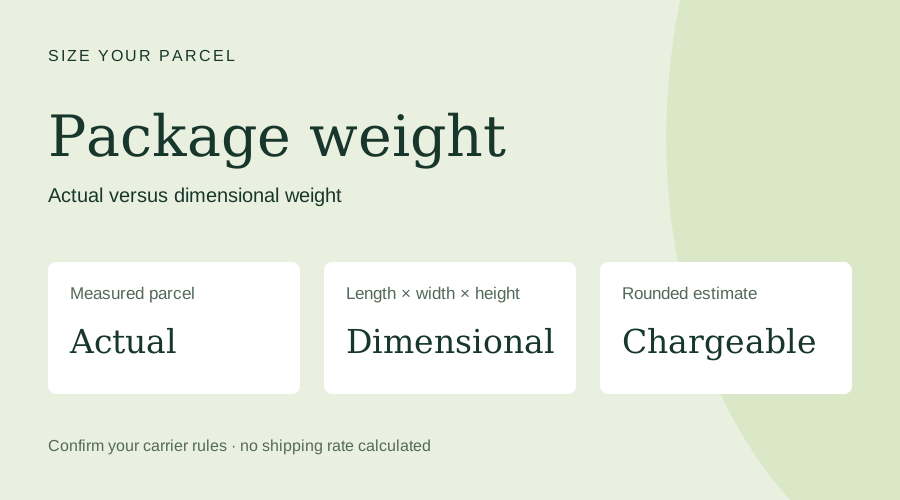
Chargeable weight is the higher of actual and dimensional weight, rounded up by the increment you entered. It is a planning estimate for one parcel. Confirm your carrier's measurement, divisor and rounding rules before booking; no shipping price is calculated.
COMMON QUESTIONS
No. The tool estimates chargeable weight only. It does not calculate a carrier rate or guarantee billing.
No. Select metric for centimetres and kilograms, or imperial for inches and pounds, then use the matching service divisor.
A smaller box reduces dimensional weight. Chargeable weight may fall if dimensional weight was above actual weight and crosses a rounding threshold.
The higher of actual and dimensional weight is rounded up to the increment you enter. Confirm the actual carrier rule before booking.
FROM PLANNING TO ACTION