Set one monthly cost period
Enter monthly fixed costs such as the rent, salaries and subscriptions you want the model to cover. Keep annual charges converted to a monthly basis.
 THE BUSINESS WORKBENCH Discuss my sales target and cost model
Turn costs into a sales target
Connect your cost base with a practical sales-volume target. Estimate the whole units and sales revenue needed to cover fixed costs, then compare that target with the demand and capacity you can realistically serve.
Start the calculatorFree to use. Results after contact details.
IS THIS THE RIGHT TOOL?
For sellers testing whether a product's contribution can support their monthly operating costs.
YOUR BUSINESS DECISION
Start with your own figures or use the example inputs. Complete the steps, then share contact details to reveal your free result.
Loading your tool…
MAKE THE INPUTS USEFUL
Enter monthly fixed costs such as the rent, salaries and subscriptions you want the model to cover. Keep annual charges converted to a monthly basis.
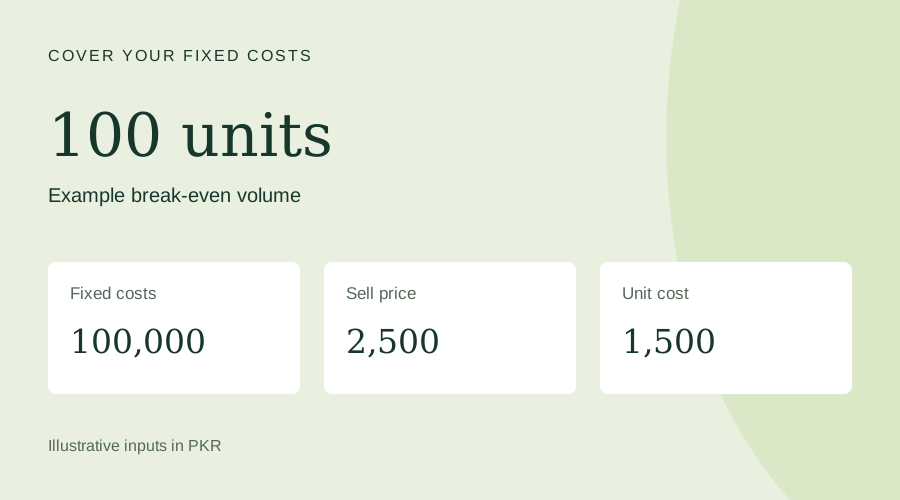
Enter the selling price and variable cost for the same product or representative unit. Variable cost should include the costs that move with each sale, such as product, packing, delivery and selling charges.
For a range of products, run separate scenarios or use a carefully chosen representative contribution. The tool assumes the selling price and variable cost stay constant as volume changes.
Break-even units round upward so the estimated contribution covers the fixed costs entered. Required sales revenue is the sales value of that whole-unit target. If price does not exceed variable cost, selling more cannot cover fixed costs under those assumptions; revise the price or cost model first.
COMMON QUESTIONS
Enter monthly costs that stay broadly the same over the sales range you are modelling, such as rent, fixed salaries and subscriptions. Put costs that rise with each sale in Variable cost per unit so the monthly target does not count them twice.
The calculator reports that there is no break-even point when price is equal to or below variable cost per unit. Each sale then contributes nothing, or a loss, toward fixed costs. Review the selling price and unit costs before increasing sales volume.
Use a realistic sales-weighted average selling price and variable cost for the mix you expect to sell. The calculation assumes that mix stays constant. Recalculate when the mix changes, especially if some products contribute much less than others.
Not necessarily. Stock may be paid for before sales and customer payments may arrive later. Review payment timing and working capital separately.
FROM PLANNING TO ACTION